Abhijeet


Make A Scene
Game Design, Branding and Visual Identity, Design Research
Graduation Project
What is the Project about?
This project explores interactive storytelling to strengthen family bonds and foster cultural connection amid modern disconnection. It bridges contemporary design with Indian traditions like Amar Chitra Katha and Tinkle comics, where children miss moral learnings. Evolving from morals-focused work,
Make a Scene is an engaging game inviting families to co-create character-driven narratives, discover hidden values, and spark multi-generational conversations. Drawing from Indian visual culture, it blends traditional storytelling with modern mechanics for playful preservation, connection, and shared joy
What inspired this?
Classic Indian comics like Amar Chitra Katha and Tinkle featured rich illustrations, simple narratives, and moral themes from folklore, family values, and adventures. They engaged children (daily readers, emotional connections via relatable experiences, magical escapes) while parents bought them for affordable, trustworthy moral education.
Now fading due to outdated content, unaware audiences, app/animation competition, slow formats, short attention spans, disconnected morals, global influences, and lack of innovation.
What made these to decline?
Indian comics industry collapsed 90% (from 500k to 50k copies) as readers shifted to digital media, animations, and gaming. Children's literature historically preserved cultural values across generations, but digital competition shortened attention spans and cultural disconnection grew. Visual storytelling evolved from picture books to graphic novels, yet traditional formats lack innovation to compete in digital-first markets. Global influences reshaped industry, risking cultural dilution.
A.K. Ramanujan's multilingual folktale compilation (22 languages, 11 thematic cycles) demonstrated how core Indian themes love, fate, morality unite diverse linguistic communities.
Parent surveys showed nostalgia for classics like Amar Chitra Katha; only 2 of 6 read daily, wanting illustrated books balancing values with entertainment, requesting AI, interactivity, climate change, and moral heroism themes.
Teen survey (25 respondents, Delhi NCR) revealed strong smartphone preference for short videos/comics; they know classic Indian characters, seek modern Indian stories in interactive formats with flawed protagonists, and demand high-quality, authentic cultural content.
The Problem
Families struggle to share Indian traditions due to digital distractions, limited access to culturally rich printed stories, busy schedules, and content disconnect from contemporary morals. Screens reduce imaginative engagement, schools and homes operate in isolation, mainstream revivals overlook linguistic diversity, parental media influence weakens, and many parents lack tools to communicate complex morals resonating with children. Teen engagement fragments due to peer-driven fast content, algorithm-driven platforms, few stories in native languages, slow traditional formats clashing with quick visual preferences, disrupted story continuity, missing discussions on moral topics, lack of contemporary relevance addressing mental health and social concerns, and absent tools for remixing and personalizing stories that blend tradition with digital culture.
The opportunity
Project shifted to adaptive, family-integrated cultural storytelling after finding individual approaches couldn't bridge generational gaps or nurture shared experiences. Visual design for tangible and digital systems helps families discover and share Indian stories fitting routines while preserving culture daily. Stories inspire engagement, connect people to culture by contextualizing facts, and build emotional bonds through relatable experiences. Oral storytelling shapes identity, norms, and values; parents initiate, children co-create, strengthening bonds. Intergenerational storytelling reduces elder isolation, builds younger generation respect, and reduces stereotypes through mutual knowledge transfer. Effective design emphasizes equal voice and bidirectional learning, avoiding hierarchical approaches and celebrating all age strengths for inclusive cultural transmission.
The Audience
Families differ significantly in beliefs, practices, and education affecting story engagement; one-size-fits-all approaches fail. Families prioritizing culture but passive in preservation show deep tradition respect, especially during festivals, yet cultural engagement remains occasional rather than routine. Children aged
6–14 are the system's emotional core their curiosity, tactile/visual preference, and agency-seeking drive interest; without genuine enjoyment and repeated play desire, the system cannot sustain as family habit.
The Solution
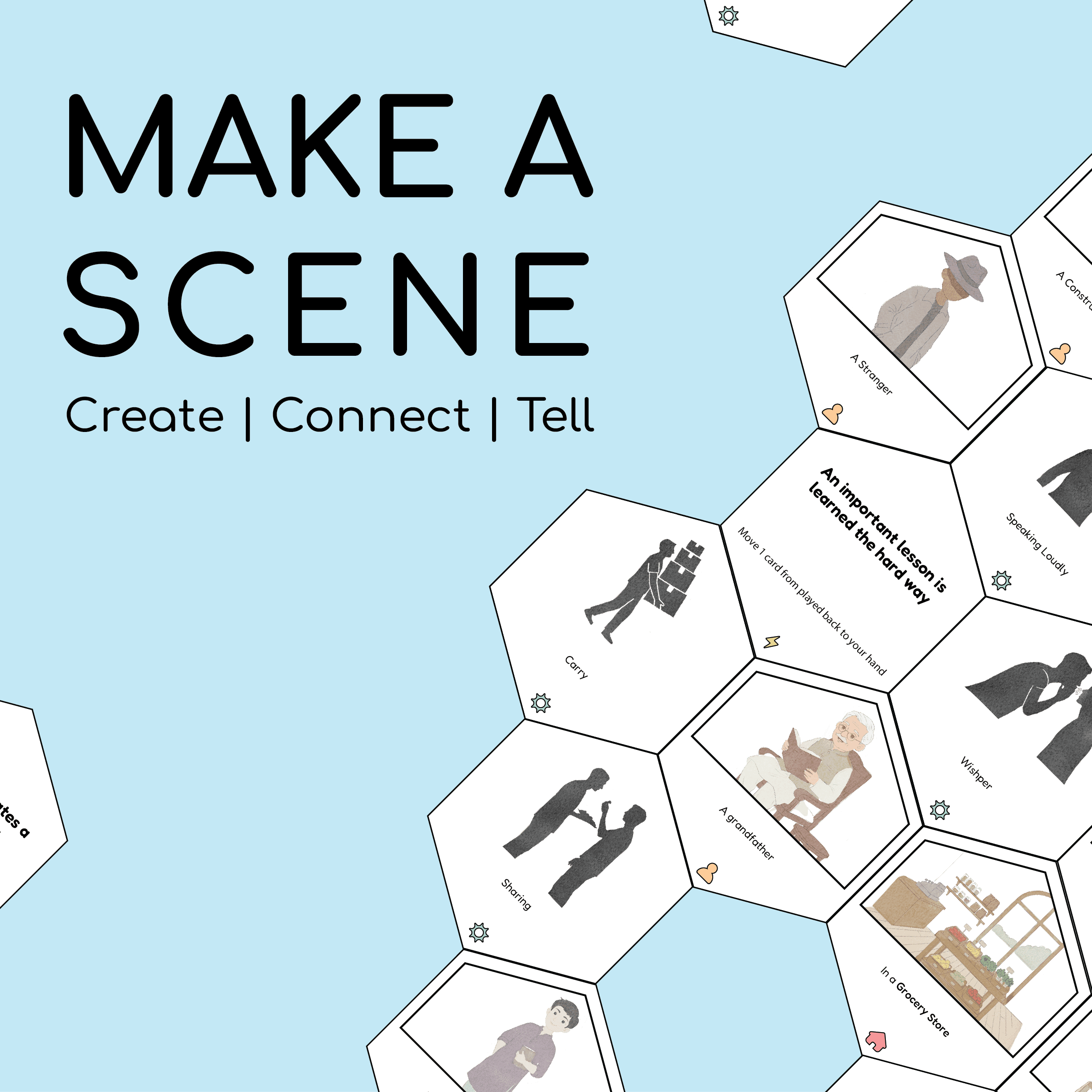
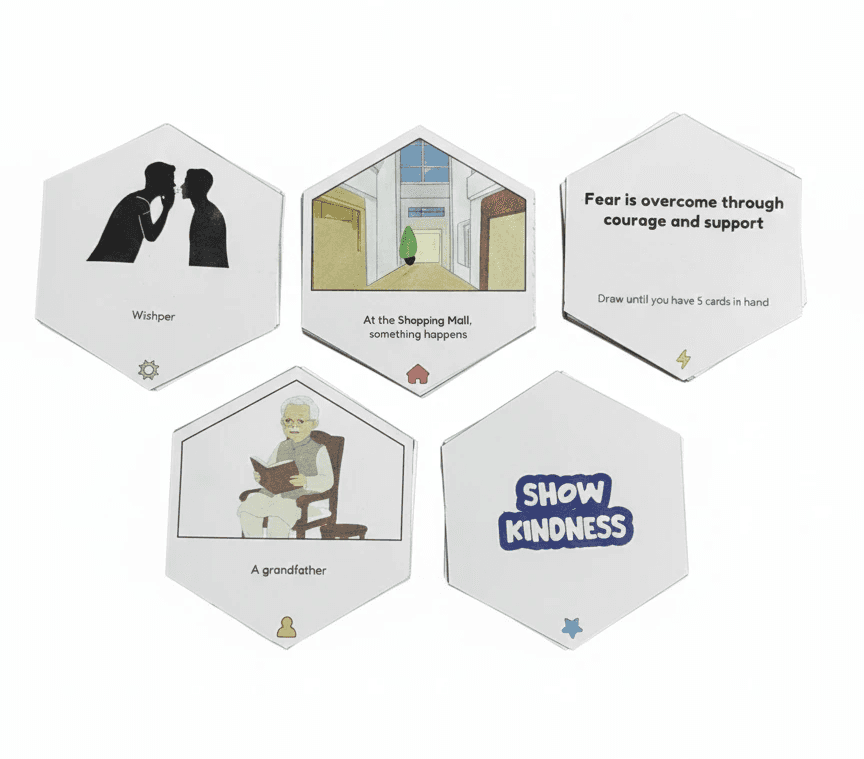
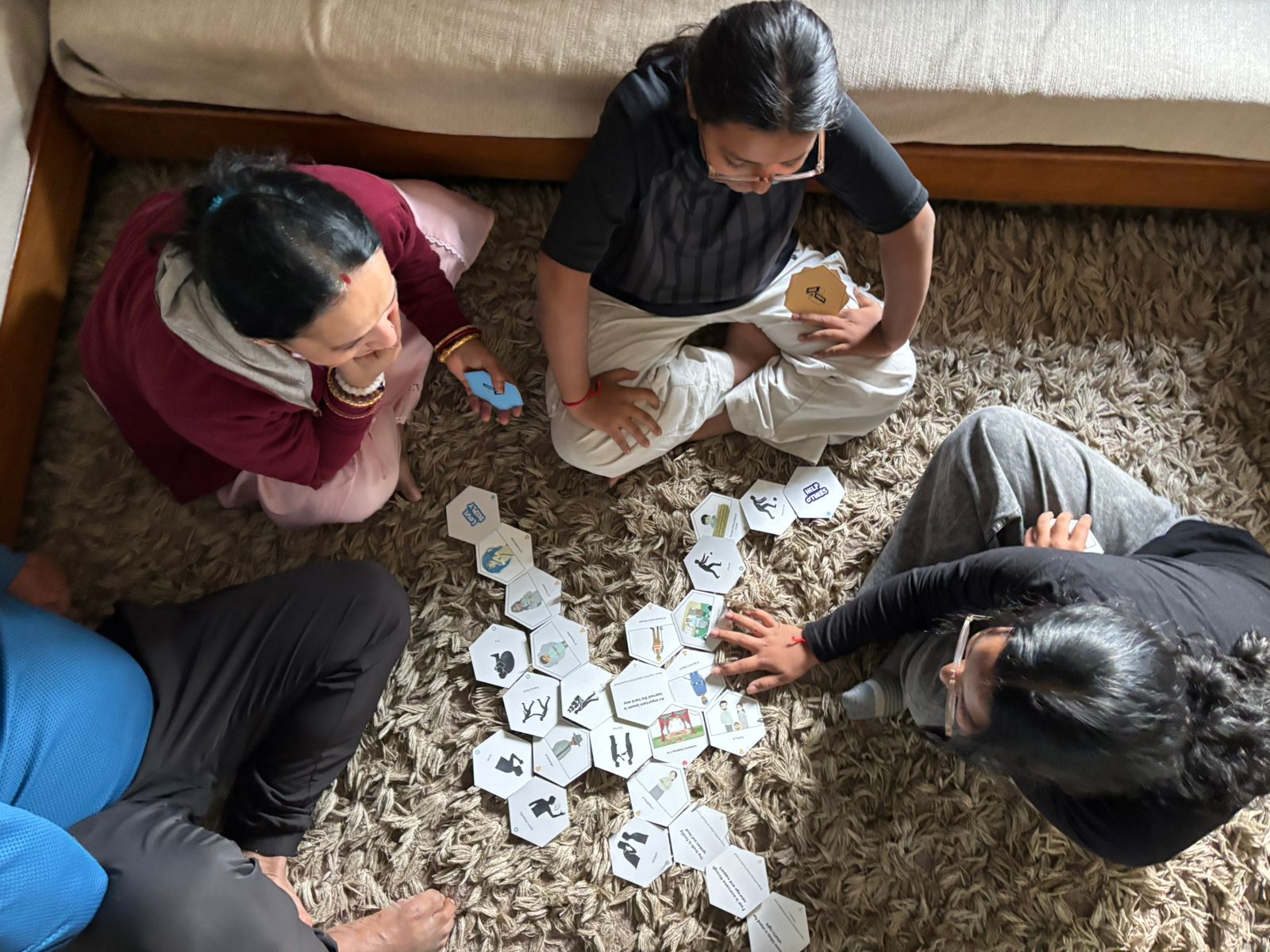
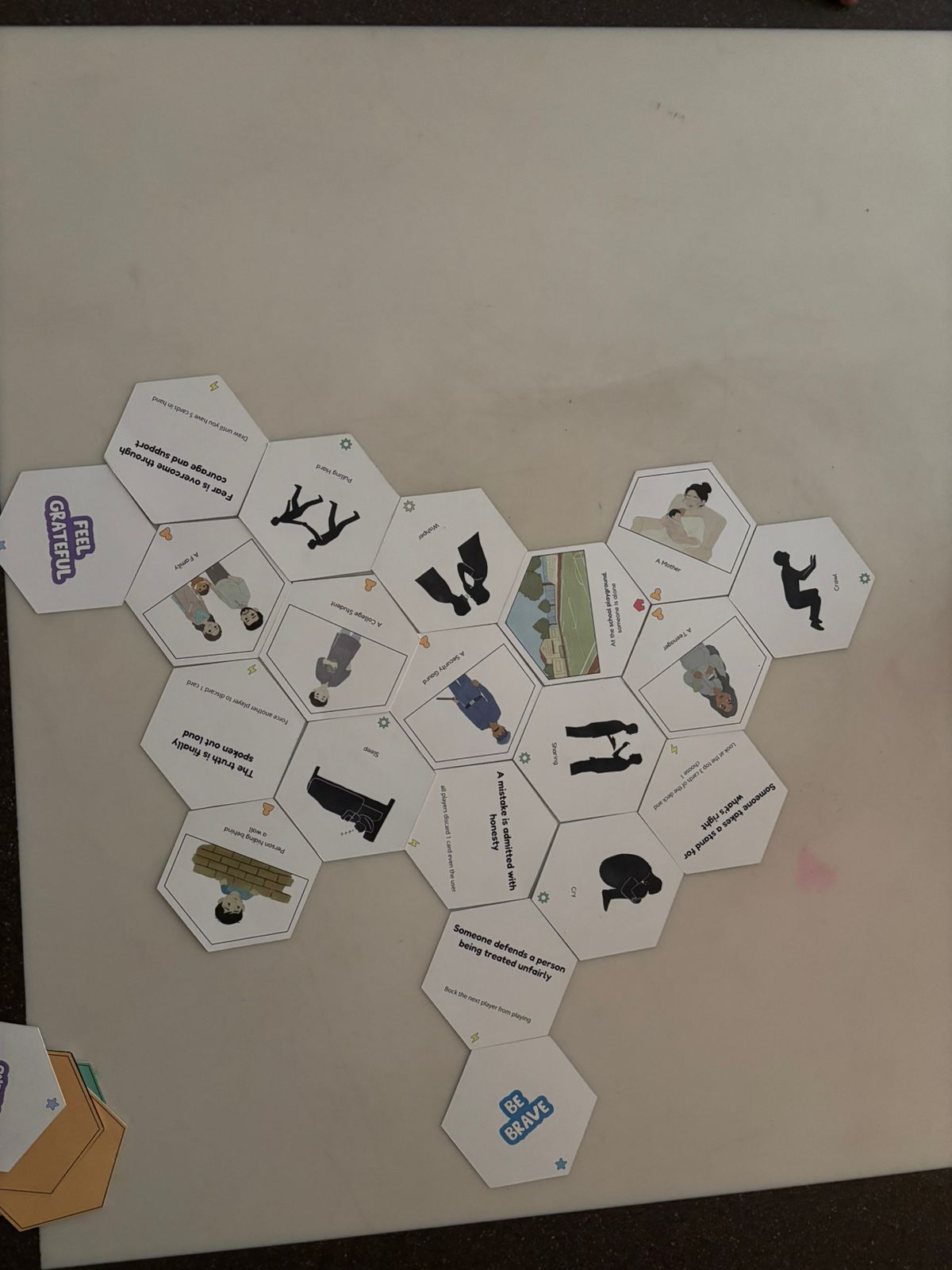
Make a Scene is a collaborative storytelling card game where families build playful tales using character, action, and secret moral cards. Players improvise stories, others guess hidden values, and everyone shares laughs while strengthening communication, empathy, and generational connection through lighthearted play.
Branding
Visual Style


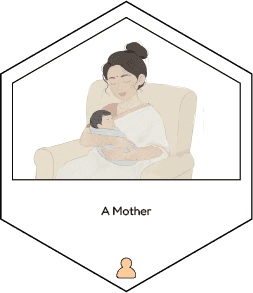
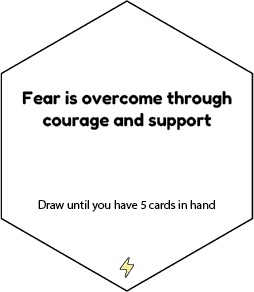
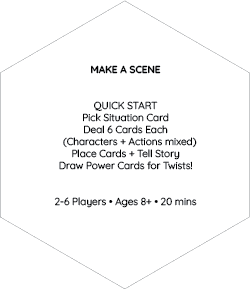
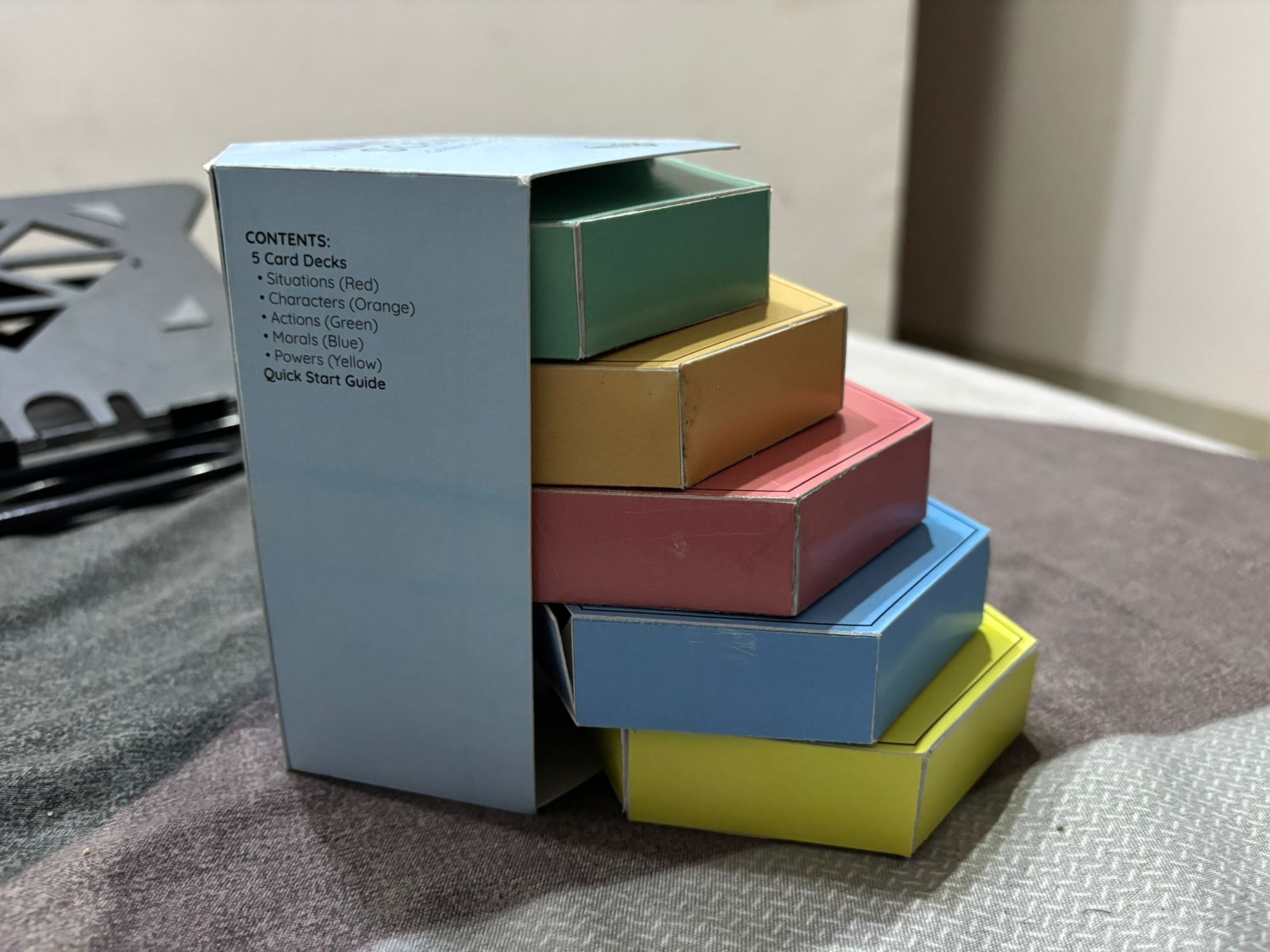
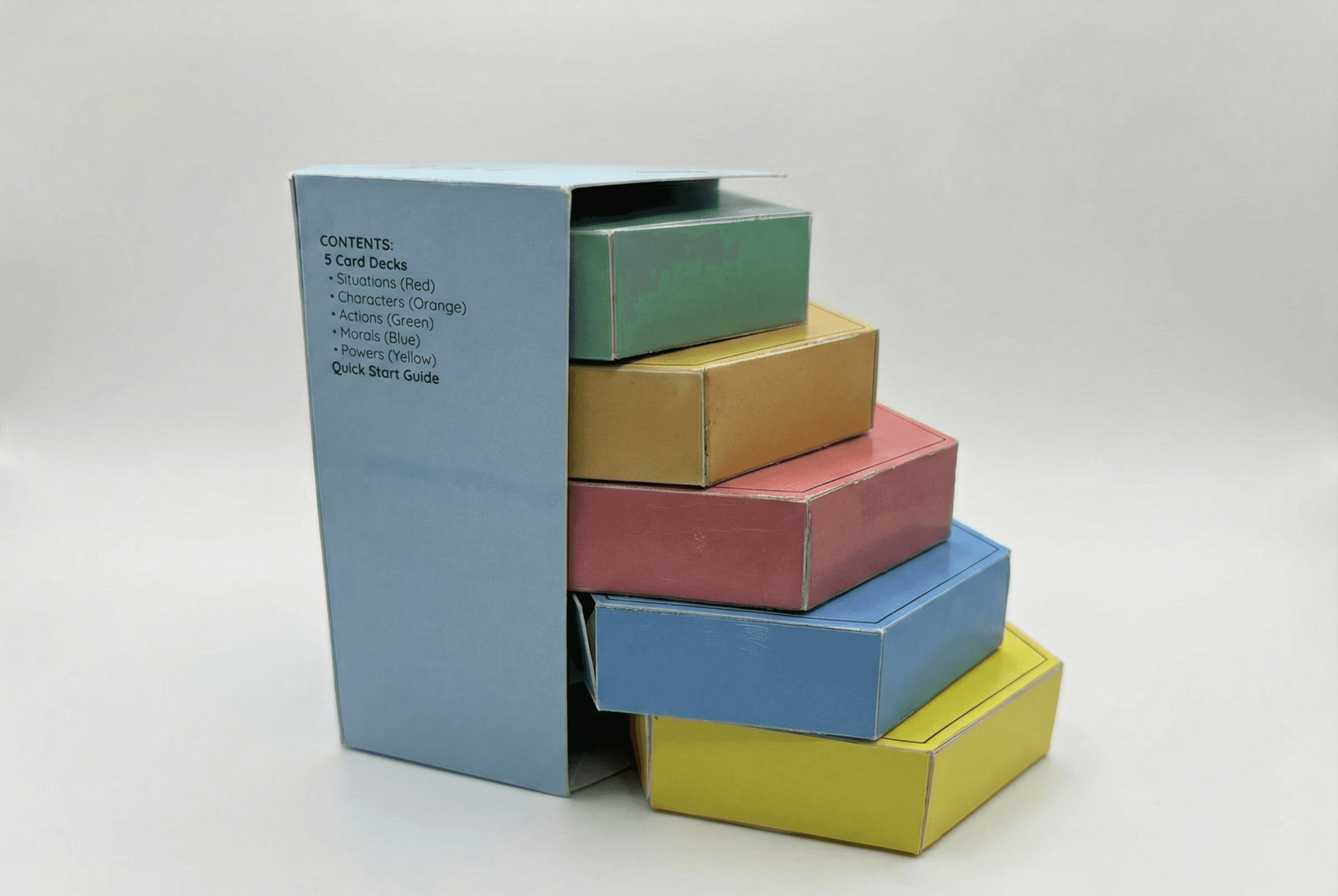
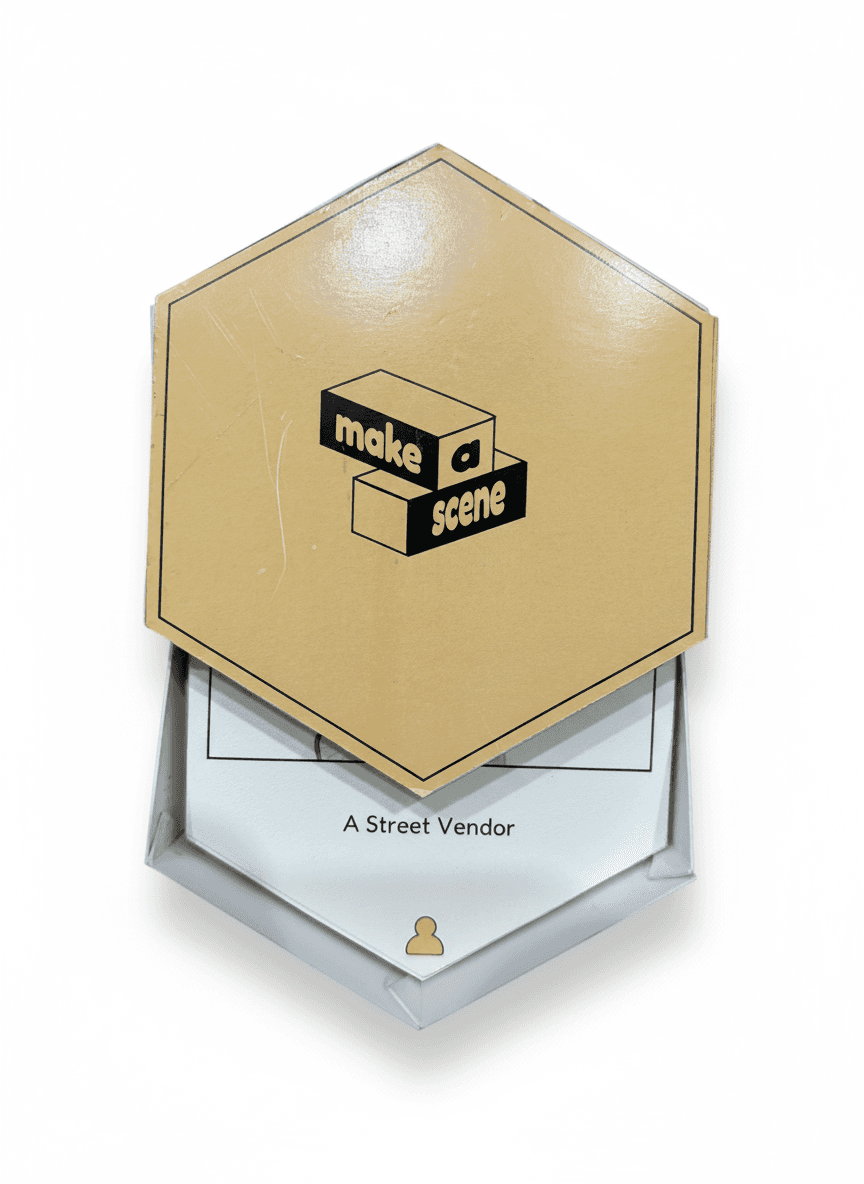
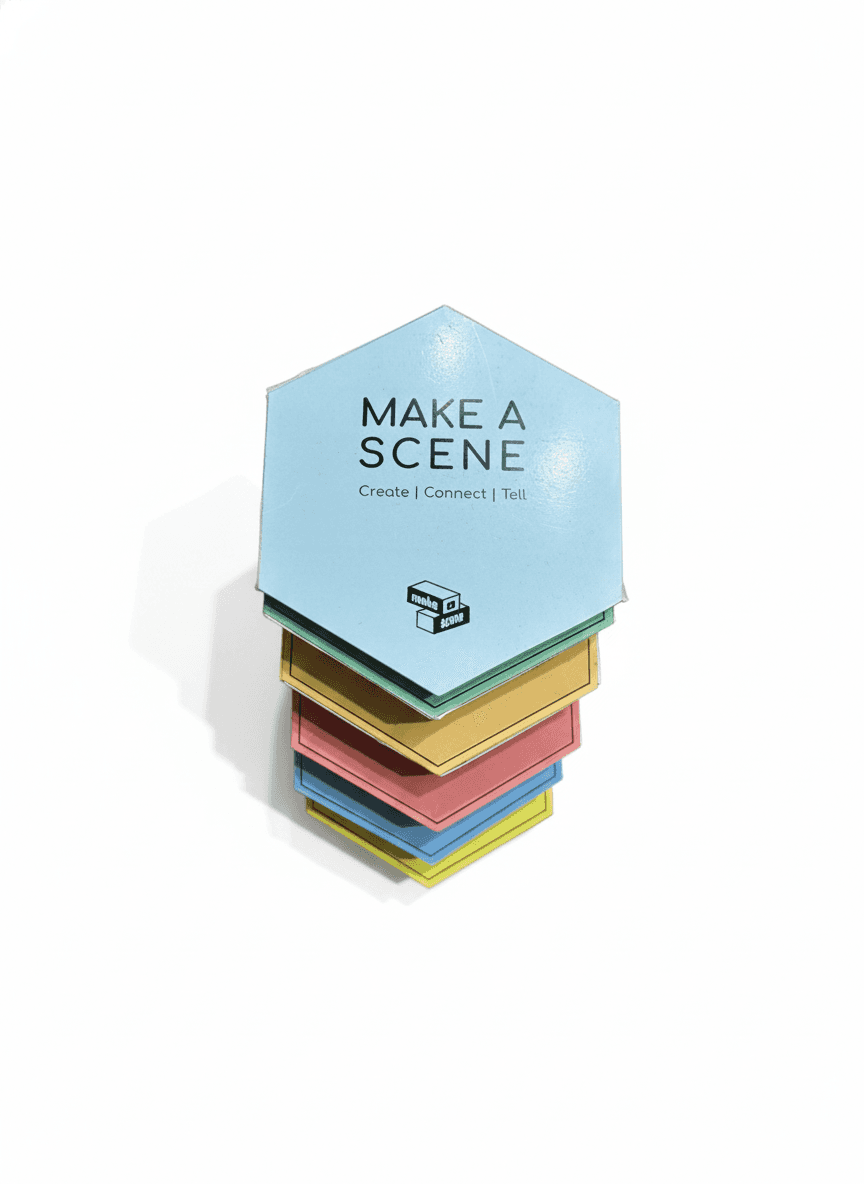
Packaging
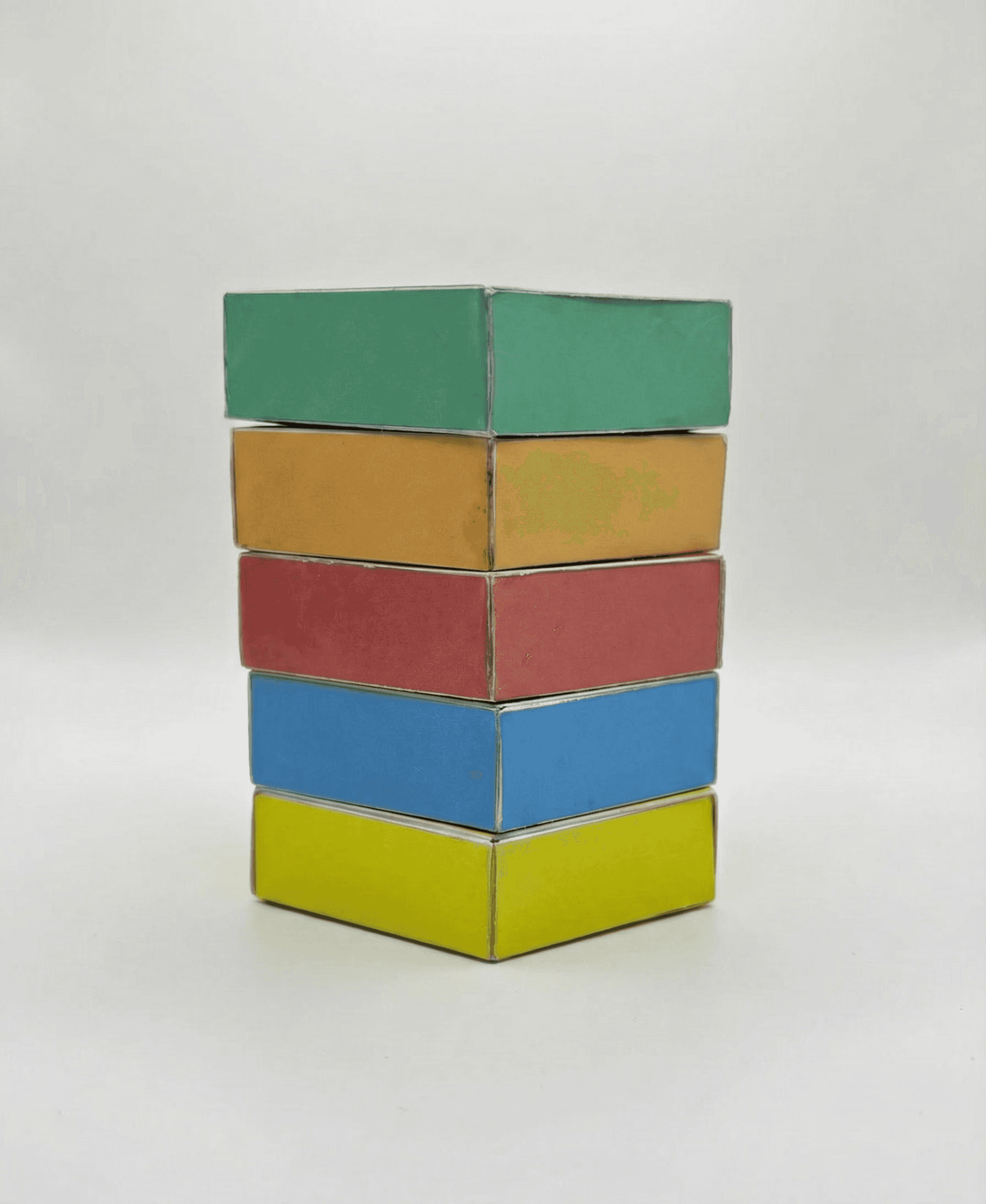
Rules to play "Make A Scene"
Shuffle Character and Action cards into Story Deck, Power cards into Power Deck, and Moral cards separately.
Place one Situation card face-up as the shared scene.
Deal Story and Power cards to players; each player draws 1 secret Moral card (hidden).
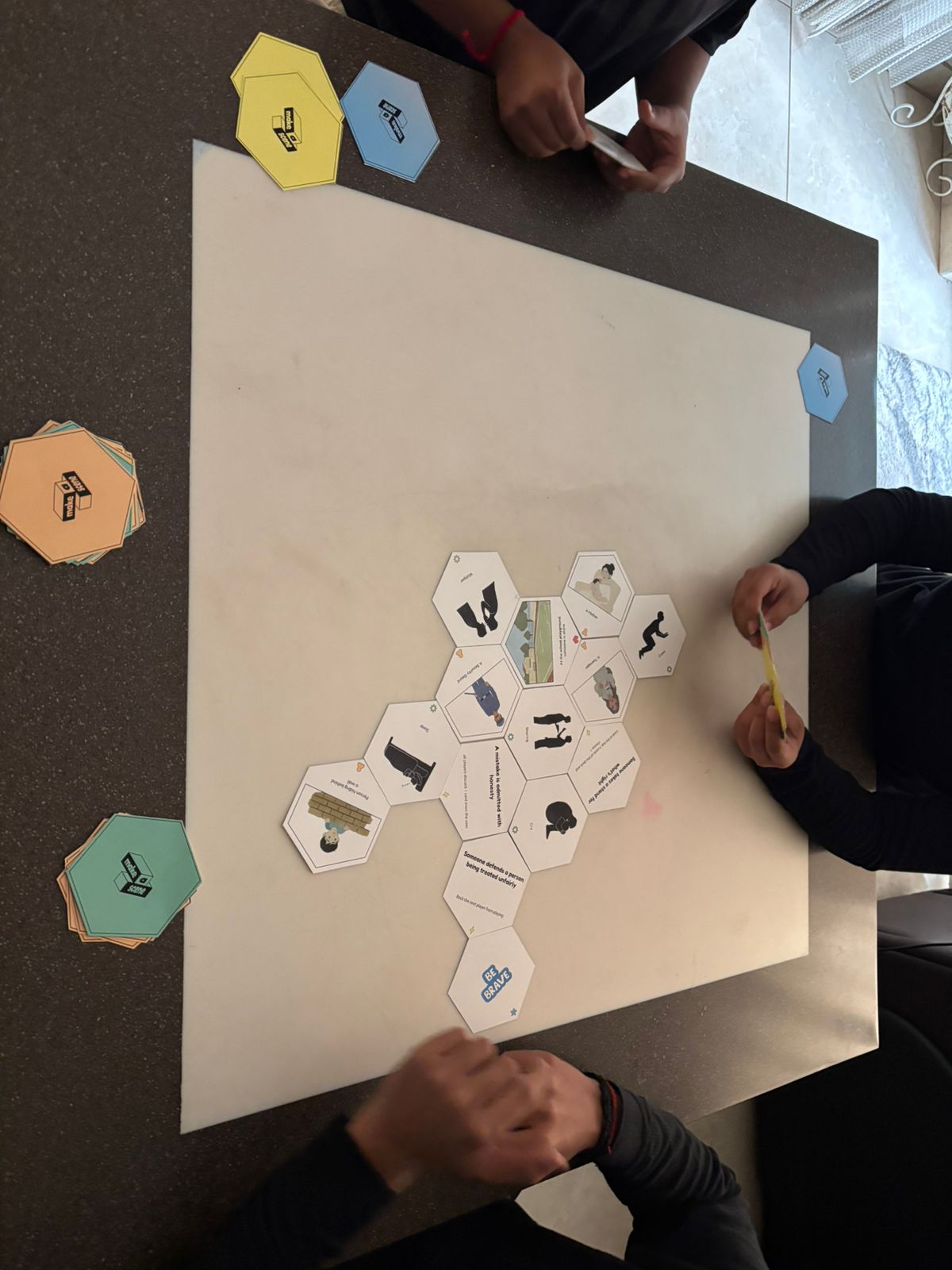
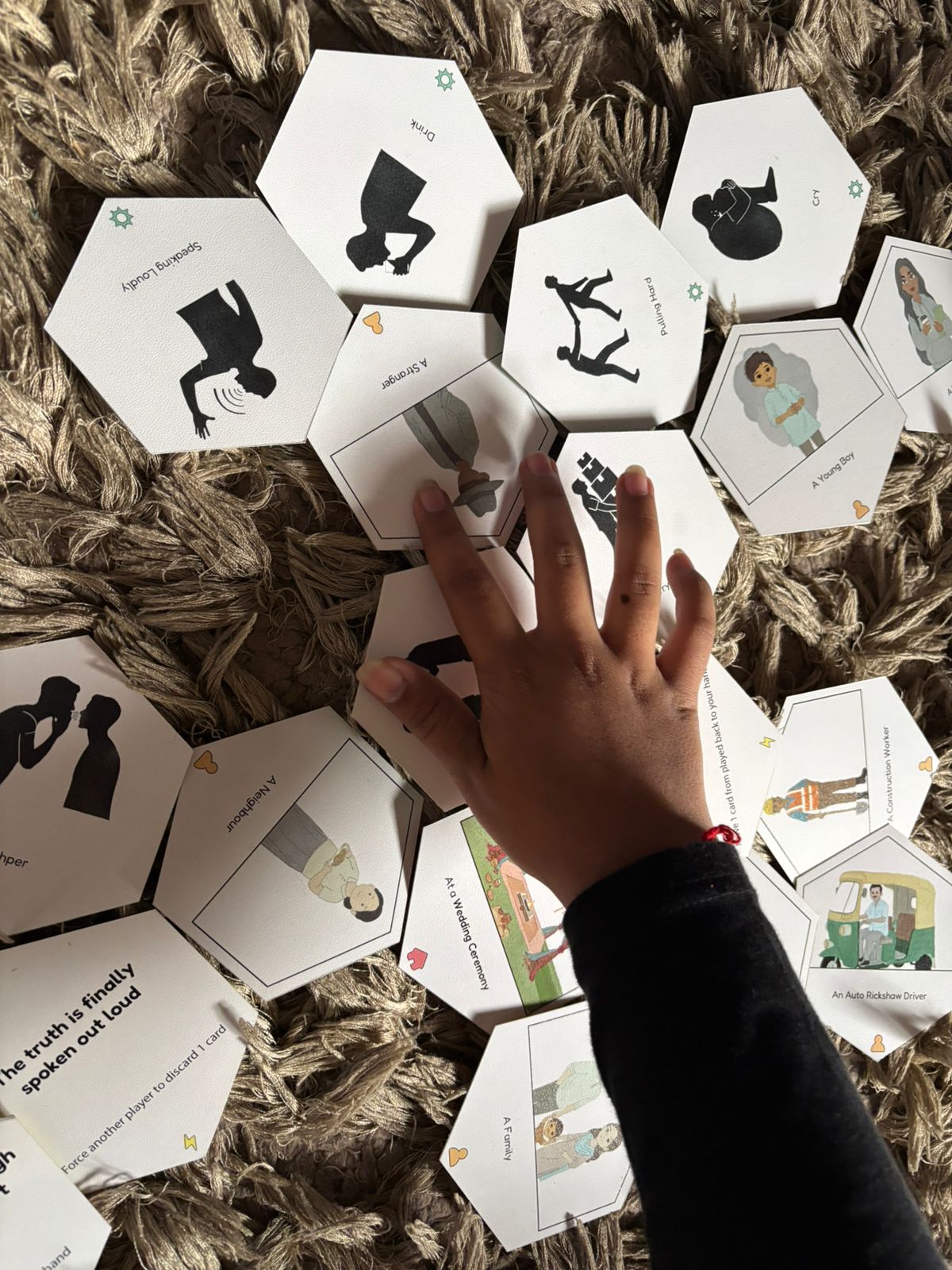
On your turn, place 1 card (Character, Action, or Power) onto any open side of the growing layout each new card must touch at least one existing card and connect to the Situation card. Power cards can be played anytime and their effects apply immediately.
Narration is optional; the story builds through card combinations and player interpretation.
When cards form a storyline reflecting your secret Moral, reveal it, point to the card cluster expressing it, explain briefly, and win if the group agrees.
What Does the Game Look ?
For the detailed document about the complete project - Click here